Showing posts with label Smithson. Show all posts

Saturday, April 7, 2012

Typology


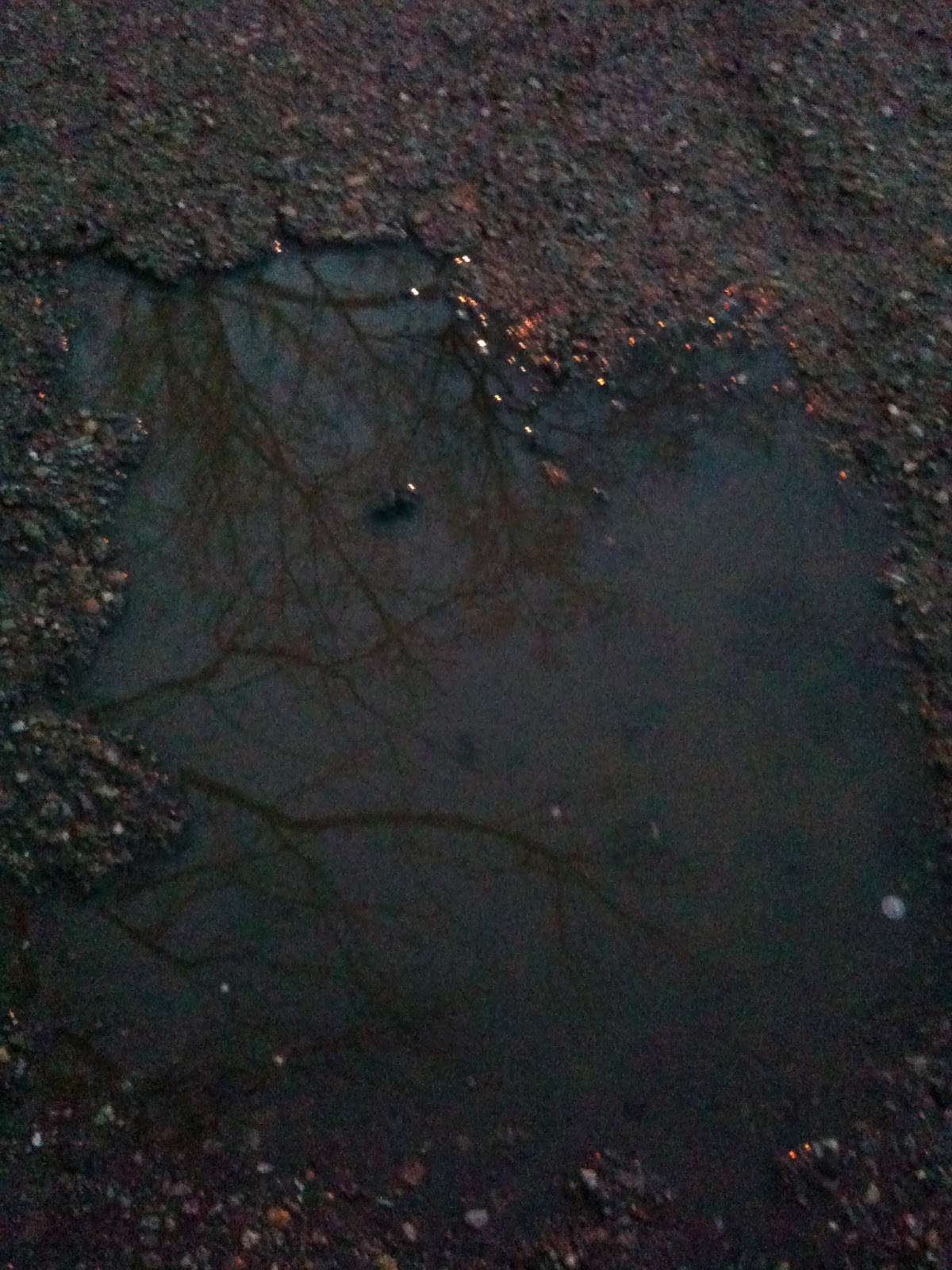
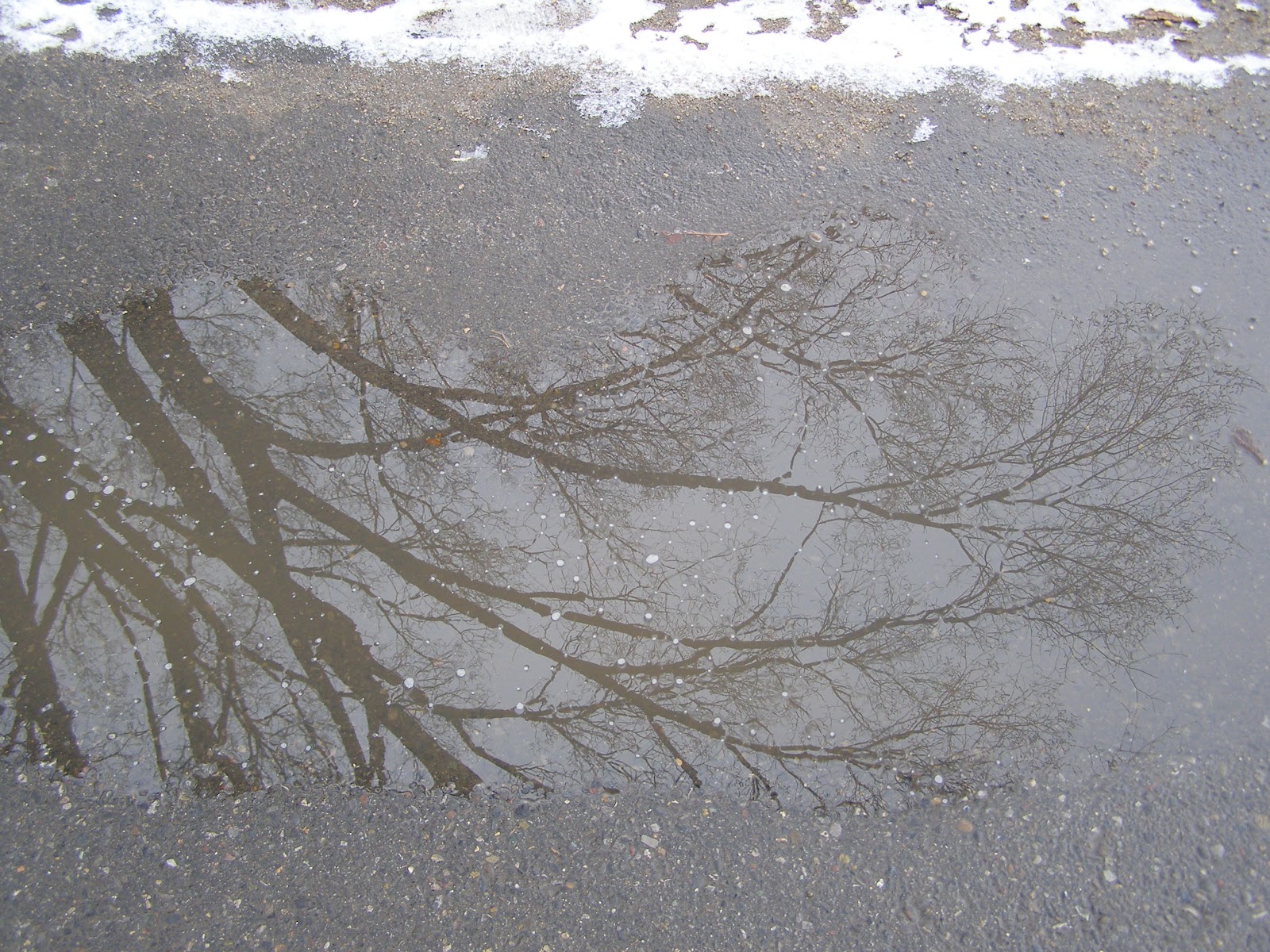
I've been working on my Typology project, a component of our final project.  I've been reading a lot of Robert Smithson's writings and looking at his work, specifically he's contemplation of sites and non-sites, and idea of resolving a lacuna or filling the gap.  "Everything is two things that converge.  This range of convergence is really the great area of speculation." (From Smithson's comments at the Earth Art Symposium in 1969).  I'll admit that a lot of Smithson's work is heavy reading for me, and not totally clear but I've enjoyed digging deeper into the ideas and understanding of Smithson. 

"As you live deeper in the heart,
the mirror gets clearer and clearer."
~Rumi~


Thursday, April 5, 2012

Filling the Gap

Smithson's elaborate and ambitious project for the Cornell University, in Ithaca, New York, (1969) art exhibit involved a number of Nonsite sculptures - Mirror Displacements - which he created in one of the galleries of the museum, each comprising mirrors and rock salt amassed from the nearby Cayuga Salt Mine.  He also made a Subsite-Sub-Nonsite piece that related a work installed "underground," that is, in a stone closet in the museum's basement, with a Subsite above ground at the Cayuga Salt Works' quarry.    Connecting the Subsite to the gallery was third element, a Mirror Trail, which mapped the placement of eight mirrors along a path that Smithson had laid out to link the art in the institution in Ithaca with the outdoor locations beyond the city.  Modest photographs of the mirrors in situ accompanied this map. 

On one wall of the gallery, he exhibited the Ithaca Mirror Trail piece together with small photographs of mirrors in the mine shaft.

On the floor, Smithson installed a group of sculptures variously composed from mirrors and salt crystals.

Photography was relegated from the status of crucial indexical (shift from context to context) witness to that of documentary supplement, while mirror reflection now assumed a vital place.  Henceforth, when he employed photography in his art, Smithson would question the image's capacity to convey anything beyond a sense of temporal absence or loss: it had become, in short, equivalent to the mirror reflection , a lacuna in perception's modalities.

*Robert Smithson: Spiral Jetty, George Baker et al., University of California Press, 2005 

Wednesday, April 4, 2012

Robert Smithson

Robert Smithson is surely best known for Spiral Jetty (1970), and Earthwork on nature's grandest scale at Rozel Point on Utah's Great Salt Lake.  Made with a bulldozer, the sculpture comprises the materials of its location: mud, salt crystals, rocks, water.  Smithson died in a plane crash in 1973 while he was working on another large Earthwork, Amarillo Ramp.  As works like there show, he focused in his forward-looking and influential career on a reconsideration of the nature of sculpture-or rather, of sculpture in relation to "nature," as nature is constituted in our time.

Spiral Jetty, 1970


The natural material used to create his art, previously foreign to art in the exhibition space, serve to idetify the origin of a work's materials-far from the art-supply store.

"Instead of putting a work of art on some land, some land is put into the work of art."

The use of mirrors emphasizes the important role played by  reflection in Smithson's redefinition of sculpture.  As the mirror reflects the work's setting in a museum or gallery space, it also relieves sculpture of its static nature by capturing the movements of visitors and opening up the work for multifaceted viewing.

Sixth Mirror Displacement, 1969

*Dia:Beacon, Lynne Cooke and Michael Govan, Dia Art Foundation, 2003

Monday, March 19, 2012

~ Typology ~ Assignment 4


I have finally found my inspiration for a typology to carryout for the rest of the school term as part of our fourth assignment.  In these pieces I am pulling influence from Robert Smithson's Mirror Displacements and Earthworks.